How Breakups Can Help Us Grow and Find Love Again
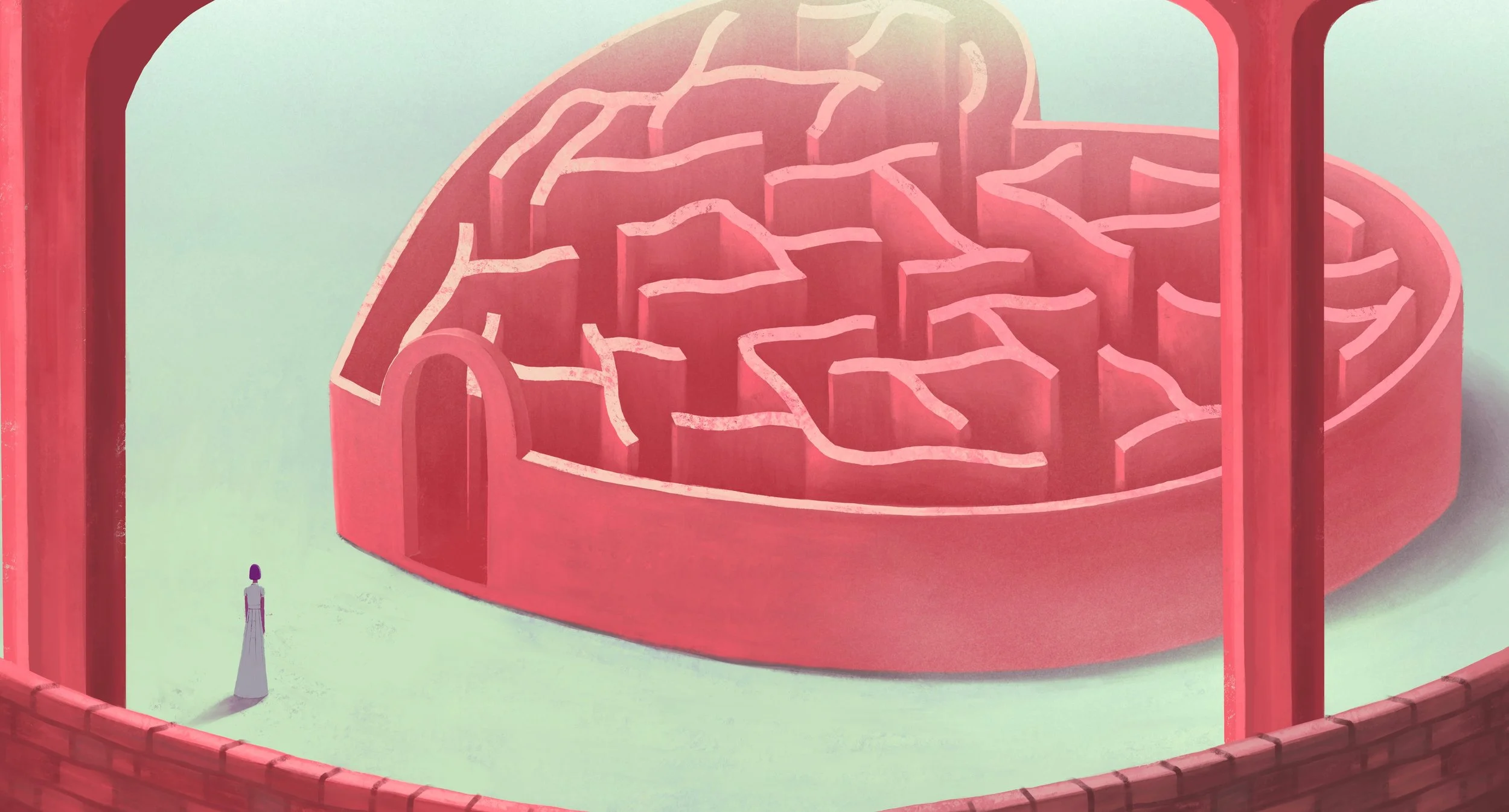
How Breakups Can Help Us Grow and Find Love Again
Breakups often feel like the emotional equivalent of turbulence. One moment we are held aloft by shared plans and familiar rhythms, and the next we are dropped into uncertainty. People talk about heartbreak as loss, but the truth is more layered. When a relationship ends, we do not simply lose a partner. We lose a version of the future, a shape to our identity, and a sense of emotional gravity. It is no wonder that many will try to distract, escape, or outrun the pain rather than sit with what the ending reveals.
What breakups often expose is how deeply we fuse our identity with another person. We become accustomed to thinking in terms of “we” and when “we” dissolves, our sense of self can feel unsteady. Questions arise in cycles: What happened? What part did I play? Could this have been different? These questions are uncomfortable, and yet they are the doorway to growth. Avoiding them does not make them disappear. They simply follow us into the next relationship, the next city, or the next distraction.
Psychologically, one of the most important steps after a breakup is owning our contribution. This is not self-blame. It is self-reflection. Every relationship has a pattern shaped by two people, and growth begins when we can acknowledge our role with honesty. Perhaps we withdrew when intimacy felt vulnerable. Perhaps we prioritised ambition over connection. Perhaps we avoided difficult conversations because silence felt safer. When we recognise these patterns, we gain the power to change them.
Breakups also invite us into vulnerability, whether we welcome it or not. Repairing, apologising, or simply admitting what we overlooked requires emotional risk. Yet vulnerability is often what allows future relationships to be healthier. It creates space for mutual understanding and gives both people the chance to ask, “What have we learned, and how do we want to move forward?” Reconciliation is not guaranteed, but meaningful change always begins with truth-telling.
There is another element of endings that is often overlooked: the tendency to escape. People try to flee emotional pain by replacing the relationship with a new romance, a new job, a new city, or a new identity. These “escape illusions” can feel relieving in the short term, but they rarely address the underlying patterns that contributed to the breakup. If the internal work is not done, the same issues often resurface. Growth requires looking inward before leaping outward.
The benefit of a breakup, if we are willing to see it, is the chance to understand ourselves with greater depth. We can reconnect with neglected friendships, revisit personal values, and examine the relational habits that shaped the partnership. Some people choose to reach out to former partners, not to rekindle the relationship but to offer closure, gratitude, or accountability. Others use the experience to build clearer boundaries or more intentional communication going forward.
Breakups are endings, but they are also beginnings. They create space for honesty, for renewed self-awareness, and for the possibility of love that is more grounded and more chosen. Whether we return to a past connection or move toward a new one, the most important shift happens internally. Growth is not what happens after the breakup is over. Growth is what happens when we are willing to learn from it.
In the end, relationships are not defined only by whether they last. They are shaped by our willingness to show up honestly, admit our flaws, and ask the questions that lead us toward healthier connection. A breakup is not a failure. It is an invitation to understand who we are, what we need, and how we want to love again.
It is important to remember that every breakup unfolds within its own context. Cultural expectations, family norms, religious values, and individual histories all shape how relationships form, how they end, and what healing looks like. Not every person has the same freedoms, risks, or support systems. These reflections offer one psychological perspective, but they do not speak for every circumstance or every cultural experience. They also differ from what occurs in therapeutic work with a psychologist, where individualisation are essential rather than any blanket universal.
Tidus is a registered psychologist and clinical registrar working toward specialisation in clinical psychology. His writing reflects a sustained engagement with ideas drawn from psychology, philosophy, and art. These opinion pieces are not clinical practice or therapeutic guidance; they are considered reflections informed by multidisciplinary theories and broader interests. Their purpose is to challenge assumptions, deepen understanding, and invite meaningful thought.